Last updated November 23, 2026
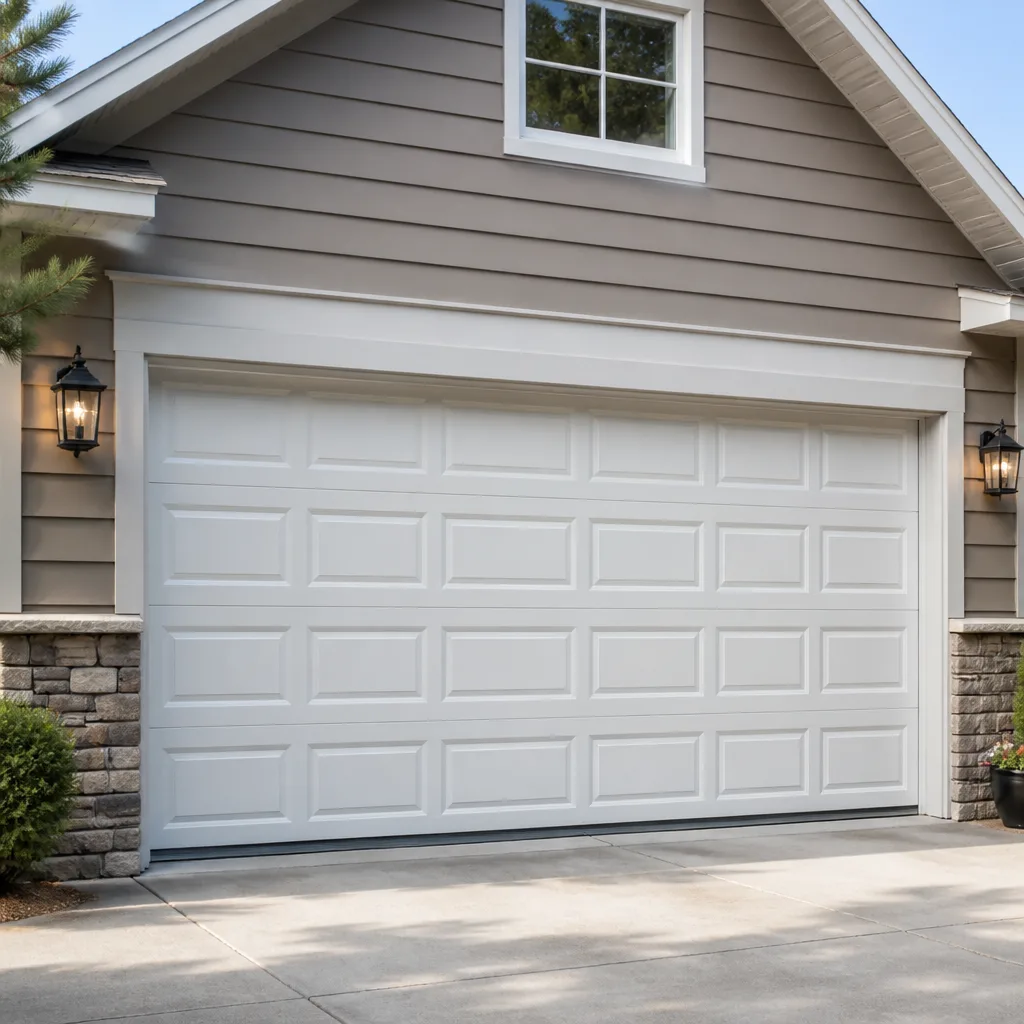 Raised-panel steel
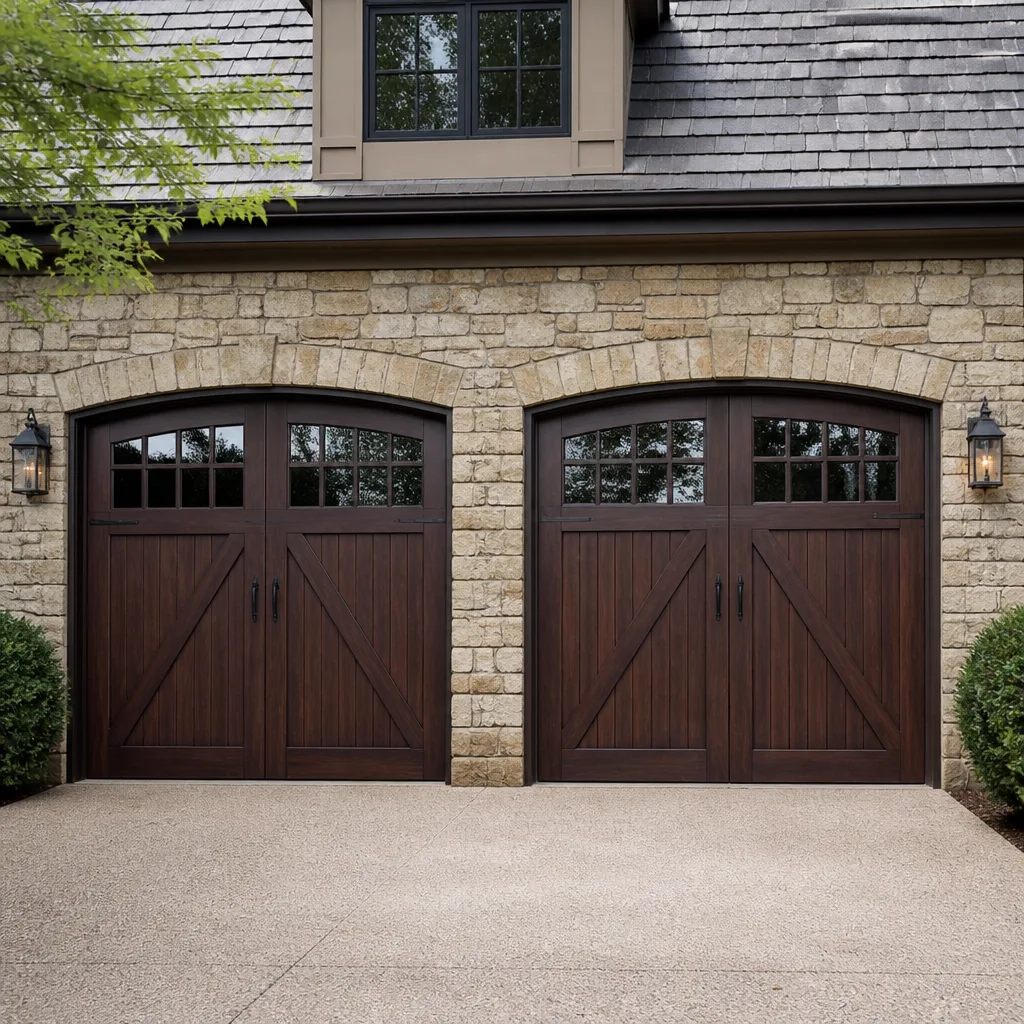 Carriage house
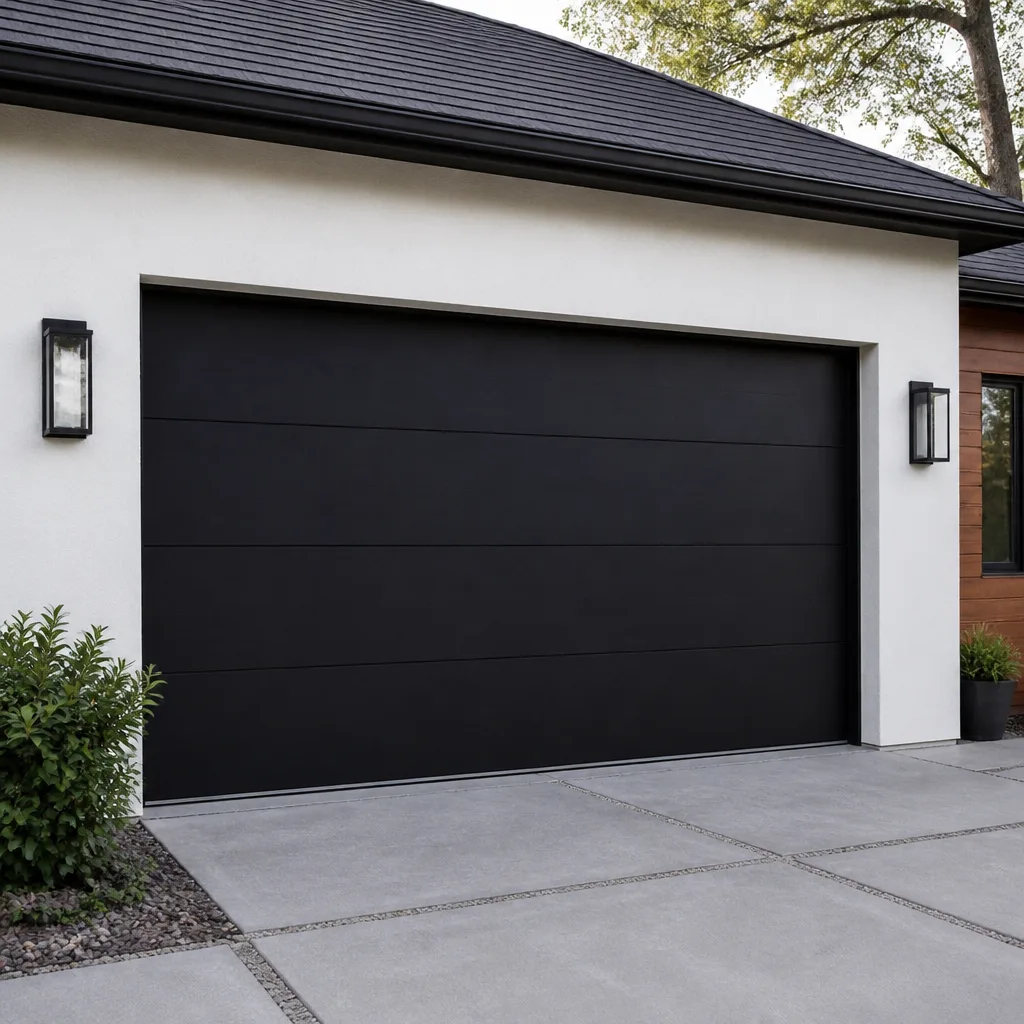 Modern flush
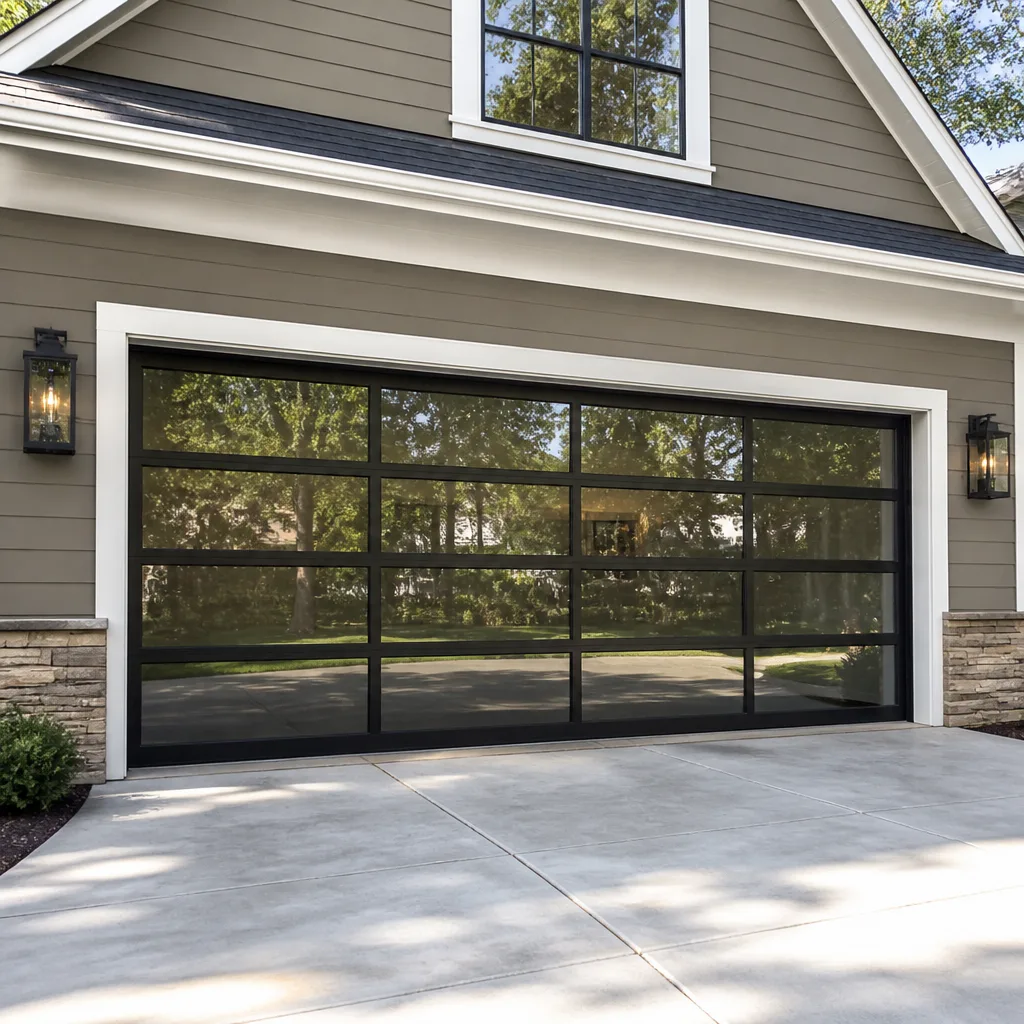 Full-view glass
 LiftMaster openers
 Chamberlain openers
Full 25-point door and opener safety check with every visit - springs, cables, rollers, tracks, and your LiftMaster or Chamberlain opener included
You get a price before we start. It does not change when the pro arrives.
Get your free estimateGarage Door Warning Signs: A Stonecrest Homeowner’s Reference Guide
Most warning sign guides treat every symptom the same. A door that’s slightly slow to close gets listed next to a door that reverses on its own, as if both deserve the same urgency. They don’t. One is a sensor adjustment you can put off for a week. The other is a safety hazard that shouldn’t wait until morning. Treating a slow close as an emergency wastes your money, and treating a reversing door as a nuisance puts your family in the path of a moving panel. In this guide, we assign a repair timeline to every common warning sign we see in Stonecrest: fix today, fix this week, or monitor. You’ll learn what each sound, sight, and motion actually tells you about the component behind it, what’s safe to check from the ground, and what’s purely cosmetic versus safety-critical. Stonecrest homes deal with their own climate patterns that shape which parts wear first, and we’ll cover that too.
Quick Answer
Garage door warning signs fall into three urgency tiers: fix today (door reverses unexpectedly, visibly bent tracks, broken spring, door hanging crooked, loud snapping noise), fix this week (grinding or rhythmic squealing, opener strains but the door works, door doesn’t seal fully at the bottom), and monitor (light cosmetic wear, minor vibration, slight weatherstrip wear). Any sign that affects how the door closes, reverses, or stays balanced is a safety concern and should be checked by a technician before you use the door again.
Styles & brands we work with
- Raised-panel steel
- Carriage house
- Modern flush
- Full-view glass
- LiftMaster openers
- Chamberlain openers
Table of Contents
- The Three-Tier Urgency System for Every Warning Sign
- Diagnosing Garage Door Sounds: What Each Noise Tells You
- Ground-Level Visual Inspection: What You Can Check Without a Ladder
- Stonecrest Climate and How It Wears Down Your Door
- Cosmetic Wear vs. Safety-Critical Failure
- Opener Warning Signs and What They Mean for LiftMaster and Chamberlain Systems
- Spring Warning Signs: The Category That Needs Special Caution
- Common Mistakes to Avoid
The Three-Tier Urgency System for Every Warning Sign
Here’s the framework we start every diagnostic conversation with. It turns vague worry into a decision you can actually act on. When a homeowner in Stonecrest calls us describing a symptom, the first question is always the same: does the door still open and close safely? Everything else follows.
Tier 1 – Fix today. These signs point to a safety-critical component. If the door reverses unexpectedly on the way down, or stops on the way up, put a hold on normal use and call. If you can see a bent, kinked, or bowed track, the door is no longer traveling in a straight line. If the door hangs visibly crooked, a cable or spring has likely failed. If a spring breaks with a sharp snap, don’t try to lift the door – call. If the door closes hard enough to send a whole-body bounce, the safety system is failing. In every case here, the door can drop, gash a limb, or trap someone underneath.
Tier 2 – Fix this week. These signs won’t hurt anyone tomorrow, but they’re trending toward a failure. Rhythmic squealing, grinding during travel, or a scraper sound along the floor fit this tier. Same for an opener that grinds a little under load or strains when the door hits a small snag. Also the door that no longer seats flush with the floor at the bottom. If your LiftMaster or Chamberlain system runs short Bluetooth or battery alerts, or fails intermittently to connect to myQ, that’s a this-week item. You can keep using the door while you schedule the visit – just don’t let it slide into months. Most of these turn into Tier 1 problems if ignored long enough.
Tier 3 – Monitor. Cosmetic scuffs, a single section panel that’s slightly out of level, a small gap at one corner of the weather seal, or a door that vibrates over one threshold but otherwise travels clean. These are the signs to note and watch. Take a photo, spot-check once a month, and keep an eye out for any sign migrating to Tier 2 or 1. A dry, dusty week can make a healthy door seem rougher than it is; a cleaning and light lubrication of the moving parts often quiets the noise without a service call.
Diagnosing Garage Door Sounds: What Each Noise Tells You
“It makes a grinding noise” is technically a warning sign. It’s also useless as a diagnosis, because three different components grind and each one leads somewhere different. Each sound below points to a likely source – that’s what lets you decide whether you’re in the fix-this-week tier or the call-someone-now tier.
Rattle and rumble: Loose hinge plates, worn rollers, or a bottom bracket that’s working its way loose. This is almost always Tier 3 or Tier 2. The door will keep working for now, but a roller that flattens or binds will eventually chew the edge of the track.
Rhythmic squeal or squeak: Dry metal-on-metal surfaces – hinges, the hinge-panel pins, the rollers, or the torsion bar. Almost always Tier 3. Spraying white lithium grease on the hinge pins and rollers usually quiets it. Don’t spray the track itself.
Grinding, particularly along the floor or one side wall: Track misalignment or a roller that’s fallen out of the track. Tier 2, and sometimes Tier 1 if the door tilts as it moves. Grinding at one particular point of travel every time is the tell.
Scraping or a light “shhrrp” each cycle: The bottom seal is dragging on the floor – a seal adjustment, not a mechanical failure. Tier 2. In Stonecrest, this often shows up when the door is missing the slight lift the spring normally provides, so check whether the door lifts easily if you disconnect the opener.
Loud snap or boom: A spring just broke. Tier 1. Don’t open or close the door again. Call for garage door spring repair.
Continuous clicking when the opener runs but the door doesn’t move: Stripped gear in the opener or a broken drive belt. Fix-this-week if the door is open, Tier 1 if it’s stuck closed and you can’t get in.
Rattling that only starts at a specific travel point: Something in the panel is loose, or a track section has a small dent. Tier 3 until proven otherwise – but it’s worth a ground-level look at the tracks.
Ground-Level Visual Inspection: What You Can Check Without a Ladder
You don’t need tools or a ladder to spot the majority of serious warning signs. Here’s what to check from ground level – and what NOT to touch. In our experience, the most common problem with DIY checks is a homeowner grabbing hardware they don’t need to touch and loosening it.
A walk-around, ground-level inspection, in order:
- Look at the whole door face-on from about 10 feet back. Does it hang level? A door that visibly dips on one side has a failing spring or a slack cable.
- Check the tracks on both sides at door height. Are they straight, or can you see a kink or a bow? A bent track is a Tier 1 sign.
- Watch the bottom seal all the way across. Does the door meet the floor at every point, or is there a visible gap at one corner or through the middle?
- Look at each hinge on the inner side of the door (not the outer face). Hinge leaves should be flat against the panel. Warped or bent hinges are Tier 3 or 2.
- Look at the rollers where they sit in the track. They should sit flush. A roller sitting crooked or popped out means call.
- Check the safety sensor lights near the floor on both sides. One light on and steady, the other flickering or off is a Tier 2 alignment issue. Nudge the bracket back into alignment, then recheck.
- Look at the cables on both sides. They should be taut and straight. Visible fraying, coiling, or slack is Tier 1 – call before you use the door again.
What NOT to do: Don’t put your hand in or near the torsion spring at the top of the door. Don’t try to straighten a bent track with a hammer. Don’t reach into the mechanism to “check” anything while the door is moving. The structural springs hold enough stored energy to cause serious injury if released uncontrolled, and the cables attached to them can crack like a whip. That warning isn’t caution for caution’s sake – it’s the reason springs are one of the few garage door repairs we’d never encourage a homeowner to attempt.
Stonecrest Climate and How It Wears Down Your Door
Stonecrest’s climate is a garage door’s slow enemy. Hot summers, cold snaps, and more humidity than a lot of Georgia homeowners account for. That combination changes which parts wear first and which warning signs show up earlier here than they might elsewhere.
Temperature cycling and springs. Every hot-to-cold swing stress-cycles the torsion spring. In a Stonecrest summer, a garage can hit a hundred and twenty degrees inside by afternoon, then drop sharply overnight. Repeat that swing across a lot of days every year and springs weaken from the wear. Spring fatigue in Stonecrest often shows its warning signs in the way the door opens – it lifts in jerks, feels heavier when you disconnect the opener, or strains the opener on the first cycle of the day. Cycle counts matter more than age alone: doors used several times a day wear their springs faster than doors used twice.
Humidity and weather seal failure. Our humid spells work on the rubber bottom seal and the metal frame around the door. The seal dries, cracks at the corners, or pulls away where it’s glued. Once the seal fails, you have three consequences: rainwater and insects finding a way inside, higher cooling bills because the gap is doing what a gap does, and small pests getting in during summer. Seal failure is almost always Tier 3 or Tier 2 early on. But once the door is genuinely not sealing, it’s Tier 2 – schedule it before summer rains make it worse.
Dust and pollen. Anyone in Stonecrest with a vehicle knows the pollen season. Pollen plus fine dust settles on tracks and roller bearings, turning grease into a gummy paste. The warning sign is a new rumble or a slightly slower travel than usual in spring. Clean the tracks with a dry cloth and a small pick or vacuum crevice tool – no solvents – and re-lubricate the rollers, hinges, and bearing plates with white lithium grease once a year.
Rust and frame paint. The metal frame around a steel door is the part most likely to develop rust at the base where it contacts the ground. In Stonecrest’s humidity, a rusty bottom panel and frame edge push moisture up into the panel and along the seal. Rust is a Tier 3 cosmetic sign early on, but once it lifts the paint away from the metal, it accelerates.
Sun and door panels. South and west-facing doors fade faster and can develop surface heat crazing on wood or composite doors. Cosmetic, but the heat expansion can distort a wood panel enough to bind in the track.
Cosmetic Wear vs. Safety-Critical Failure
The single most useful distinction in this guide is between a sign that’s ugly and a sign that’s dangerous. Sellers ask us this all the time when preparing a Stonecrest home for inspection: does this need fixing, or does it just look tired? Here’s how to sort it.
Purely cosmetic or low-risk:
- Faded paint or a dull finish on exterior panels
- A single small scuff, dimple, or shallow dent that doesn’t pierce the panel
- Surface rust spots on a steel bottom panel that are still just surface
- A slightly uneven panel line (cosmetic warp with no track binding)
- Stickers, graffiti, or cosmetic hardware scuffs
- Minor seal wear visible but not yet creating a gap
Safety-critical – treat as Tier 1 every time:
- Frayed, kinked, or slack suspension cables
- A visibly bent or bowed track that changes the door’s path
- A door that reverses without hitting anything (or before hitting something)
- A door that sags or hangs crooked
- Any broken spring or snapped spring section
- An opener that pulls a door that binds
- Hinges that are showing the panel separating (a hinge gap opening)
- The bottom safety sensor that doesn’t reverse the door when you pass a foot under it
Here’s the rule we give homeowners: if the answer to “could this hurt someone or trap someone” is yes, it’s Tier 1 no matter how minor it looks from the outside. That means anything that affects the door’s balance, path, or safety reverse. Cosmetic warning signs don’t need a technician visit unless they’re bothering you; safety signs do not wait.
Opener Warning Signs and What They Mean for LiftMaster and Chamberlain Systems
Modern openers tell you much more than older ones did, and that changes how you triage their warnings. A LiftMaster or Chamberlain opener with a myQ hub and Wi-Fi connection can report a jam, a short, an obstruction during a cycle, or a battery fault. Those alerts are actually a gift: they turn invisible failures into warning signs you can see.
Fixed alerts on the wall unit: Most modern units and remotes have a light code the manual explains. A steady or flashing code can mean the safety sensors are blocked or misaligned, the travel limits or force limits need adjusting, or a board is sending a fault. Match the code to your model’s manual. This is a fix-this-week visit in most cases. If the door won’t close at all, it’s Tier 1.
Continuous beeping or flashing: That’s the door’s lost-signal or sensor-status alert, not necessarily a fault. Check the sensor lights and the safety reverse first.
Opener grinds and strains on the first cycle of the day: That’s usually the opener forcing a door that’s binding or that has a faded spring – meaning the door is heavier than it should be. The opener isn’t failing; it’s being asked to lift more than it’s rated for. Left alone, it will eventually damage the opener gear and the door mechanism together. Tier 2.
Remote works only up close: Weak batteries on the remote first, then a battery in the wall unit, then an antenna or radio board issue. Tier 3, quick to check.
Older Craftsman or Genie systems: These don’t have connected apps, but their warning signs are the same – strain, noise, and force. A Craftsman chain drive that suddenly gets louder, or a Genie screw drive that develops a stutter, is telling you something mechanical is changing. Older Raynor systems with a legacy opener often run alongside newer smart units on the same property, and they respond to the same symptoms in the same tiers.
If a code or alert keeps returning after a reset, don’t reset it again – that’s the opener convincing you it’s fine when it isn’t. Call and let a technician read the code from the manual and figure out what it means for your model. That’s what we mean by brand-trained, not brand-locked: we’re not guessing at a Raynor from a Clopay manual.
Spring Warning Signs: The Category That Needs Special Caution
Springs are the one component where we ask homeowners to stop and think before touching anything. A torsion spring at rest holds an enormous amount of stored energy, and when it releases that energy is dangerous. When a spring fails it doesn’t warn politely.
Signs the spring is at or past its end:
- The door lifts in jerks and feels heavy when you disconnect the opener and lift by hand (do this with the door closed and at a safe spot).
- You hear a snap or boom from the garage, often followed by the door refusing to open all the way or hanging crooked.
- Visible gap or break in a torsion spring coil or extension spring section.
- A visible sag or bow in the top section from strained lifting.
- The opener strains or the door lifts only a few feet and stops.
- One side of the door visibly higher than the other.
If any of these show up, treat it as Tier 1 and leave the door alone until a technician has been out. What we’re checking is whether the spring is fatigued, broken, or just not transferring force correctly – three very different outcomes. A spring that’s dried out from heat cycles in a Stonecrest summer is a strong candidate for fatigue in that pattern. A spring that snaps while you’re standing under the door is a different story. Don’t test this one with the door open – or with fingers near the spring.
When the springs do need replacing, we’re going to talk about both springs, not just the one that snapped. Springs are usually installed in matched pairs, and a pair costs about twice the range quoted for a single spring. We’d rather tell you that upfront than surprise you mid-job with a second number.
Common Mistakes to Avoid
- Treating every warning sign like an emergency. A squealing hinge and a reversing door are not the same problem. Putting a Tier 3 squeal on the same urgency as a Tier 1 reverse wastes your money and can make you distrust legitimate warnings later.
- Ignoring a Tier 2 sign “just until winter.” In Stonecrest, our wetter, colder stretch is hard on weather seals and temperature-cycling springs. A sign you noted in October is a bigger problem by December in most cases.
- Trying to DIY the springs or the cables. We’ve seen homeowners approach a torsion spring with a pair of vise grips and a hope. Springs and cables are why this trade has a trained-technician fire door. Not a project for a homeowner with a YouTube video.
- Spraying WD-40 on the tracks. The tracks aren’t supposed to be greased – they’re supposed to be clean and dry. Greasing the track collects dust and leaves a sticky film that binds rollers. Grease goes on the hinges, rollers, and bearing plates, not the track surface.
- Bumping up the opener’s force setting to “make it close.” Increasing the closing force on an opener bypasses the safety reverse feature that protects people and pets. If you’re bumping force to get the door to close, the danger is already present.
- Assuming a dark sensor means a broken sensor. Nine times out of ten, the sensor is sitting slightly crooked, the lens is dusty, or the sun is hitting it at a bad angle in the afternoon. A quick wipe, a straighten, and a test reverses most of these cases.
- Calling a general handyman. A garage door is a mechanical system, not a hinged box. A handyman who doesn’t work with the springs, torsion balance, and safety reverse every day is diagnosing from the outside. Find someone who works on that system every day.
See the difference
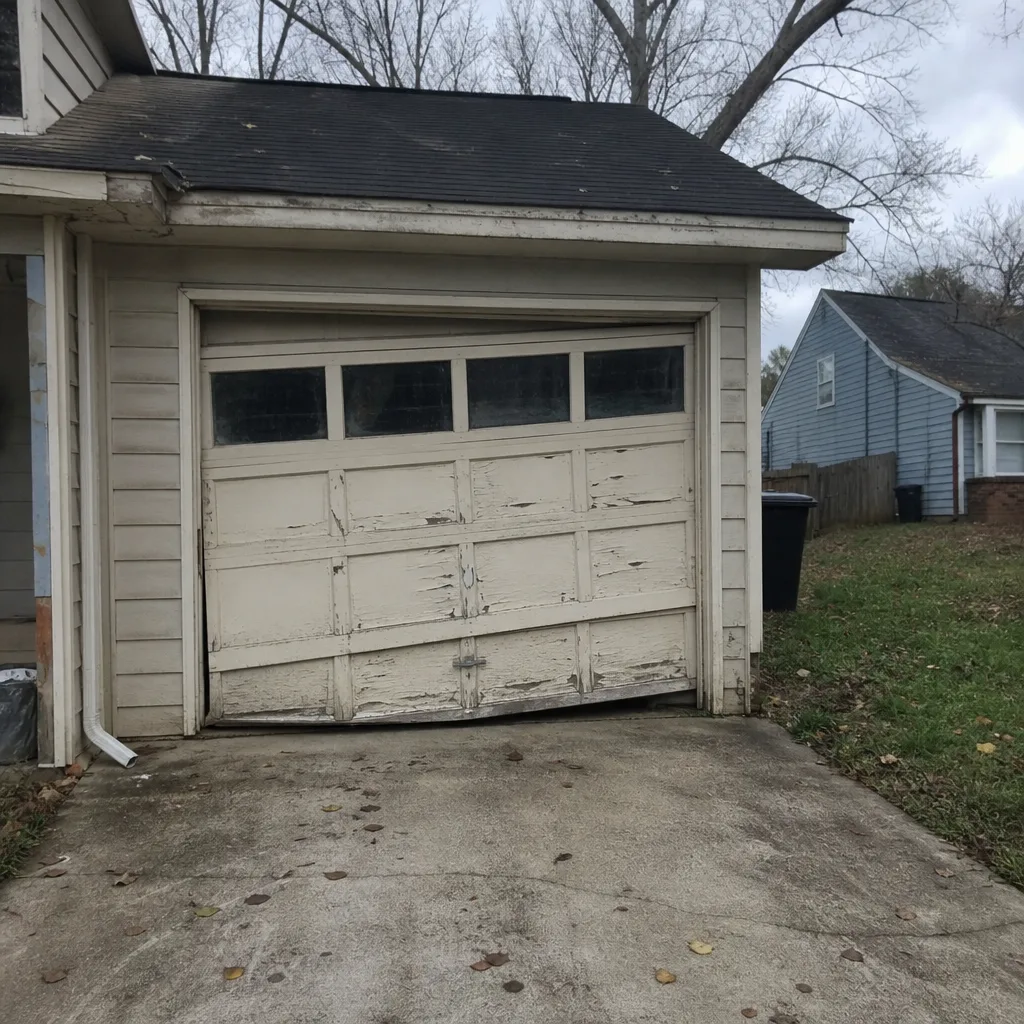 Before
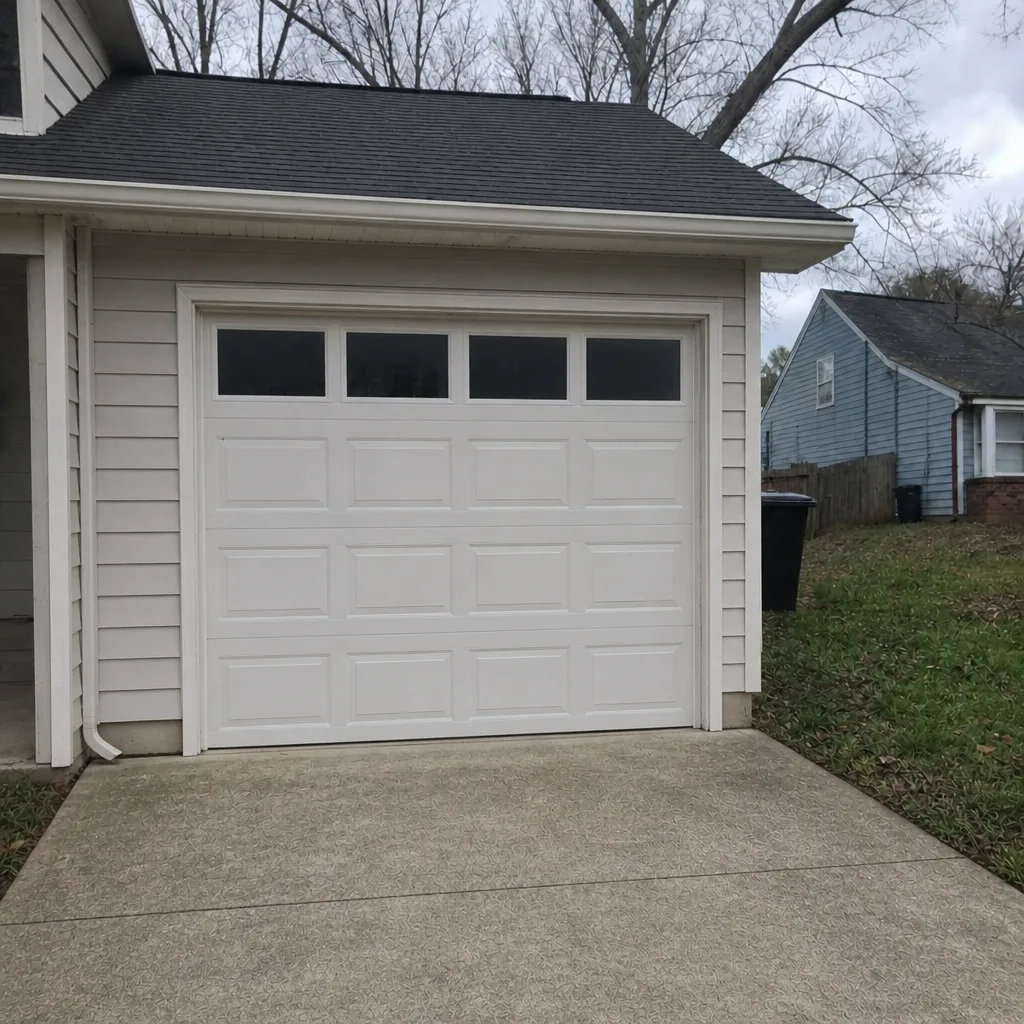 After
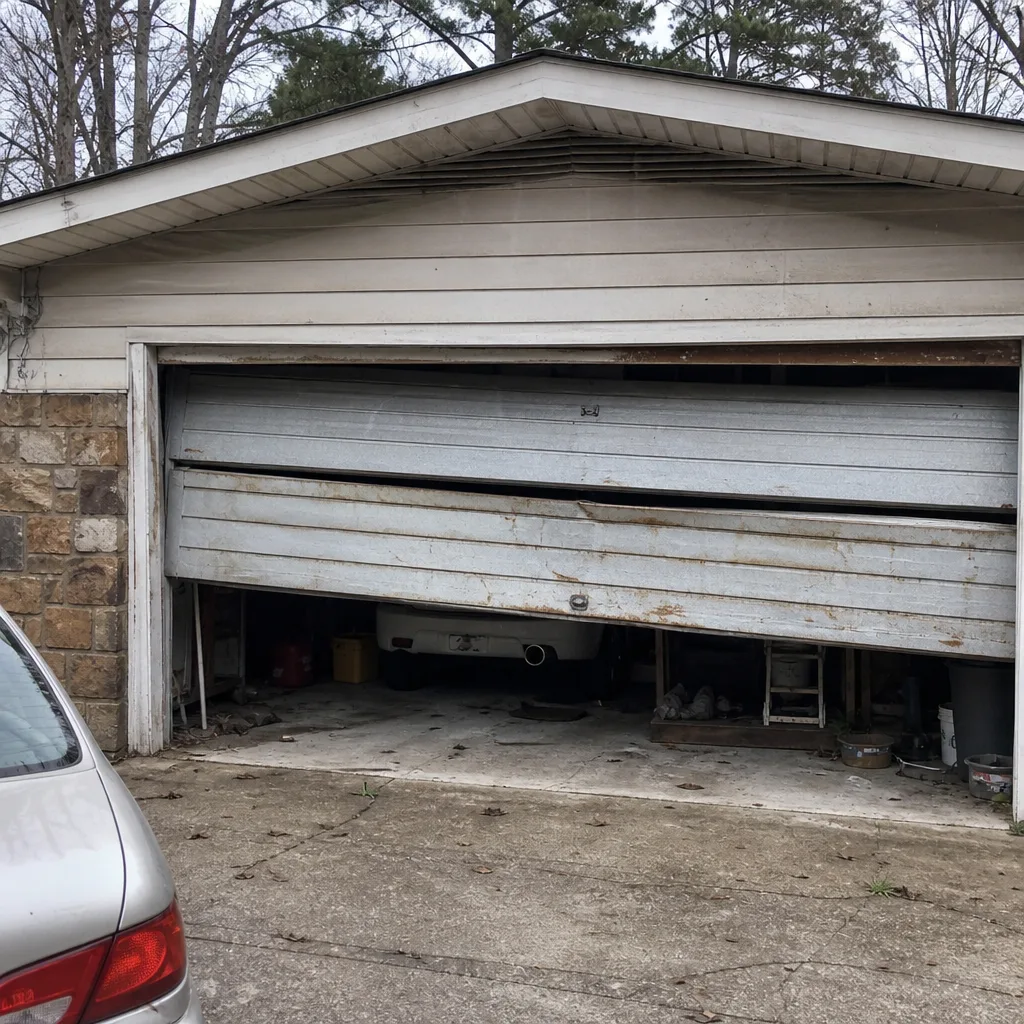 Before
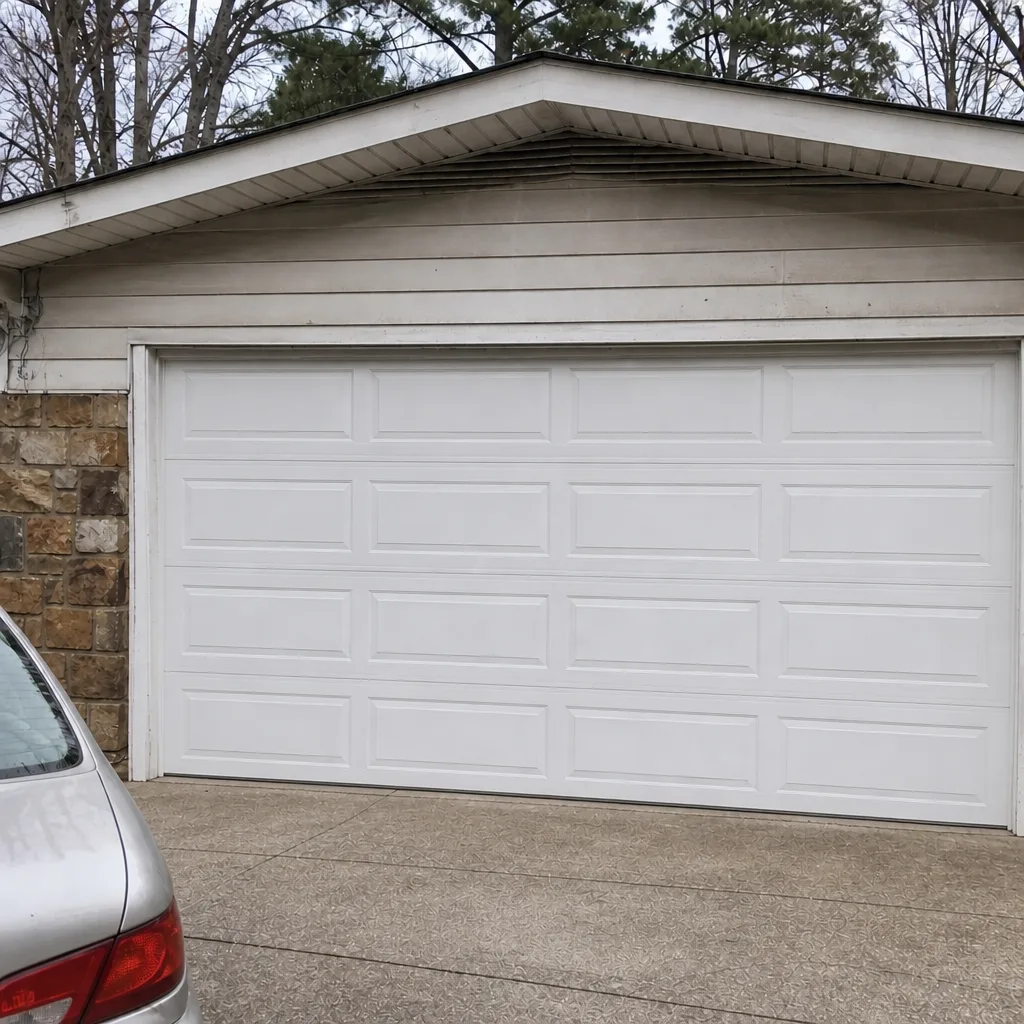 After
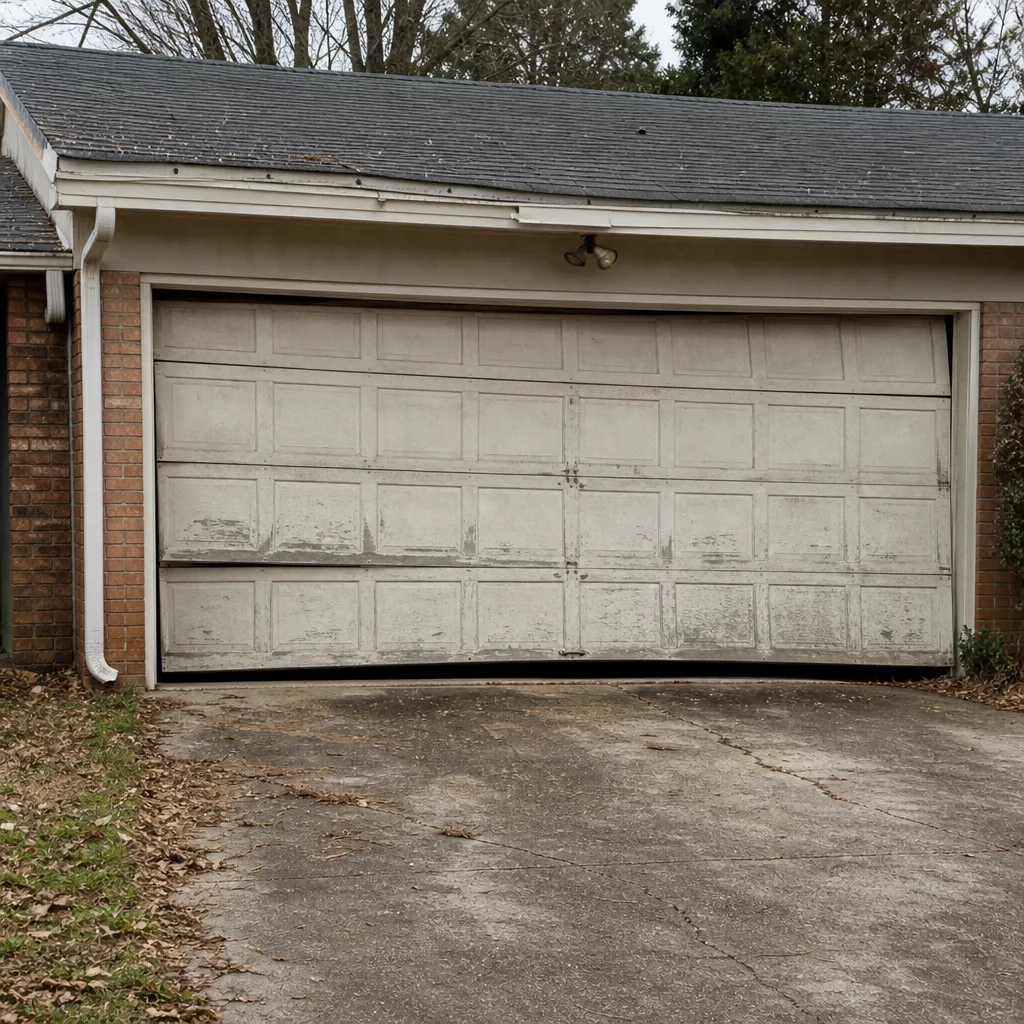 Before
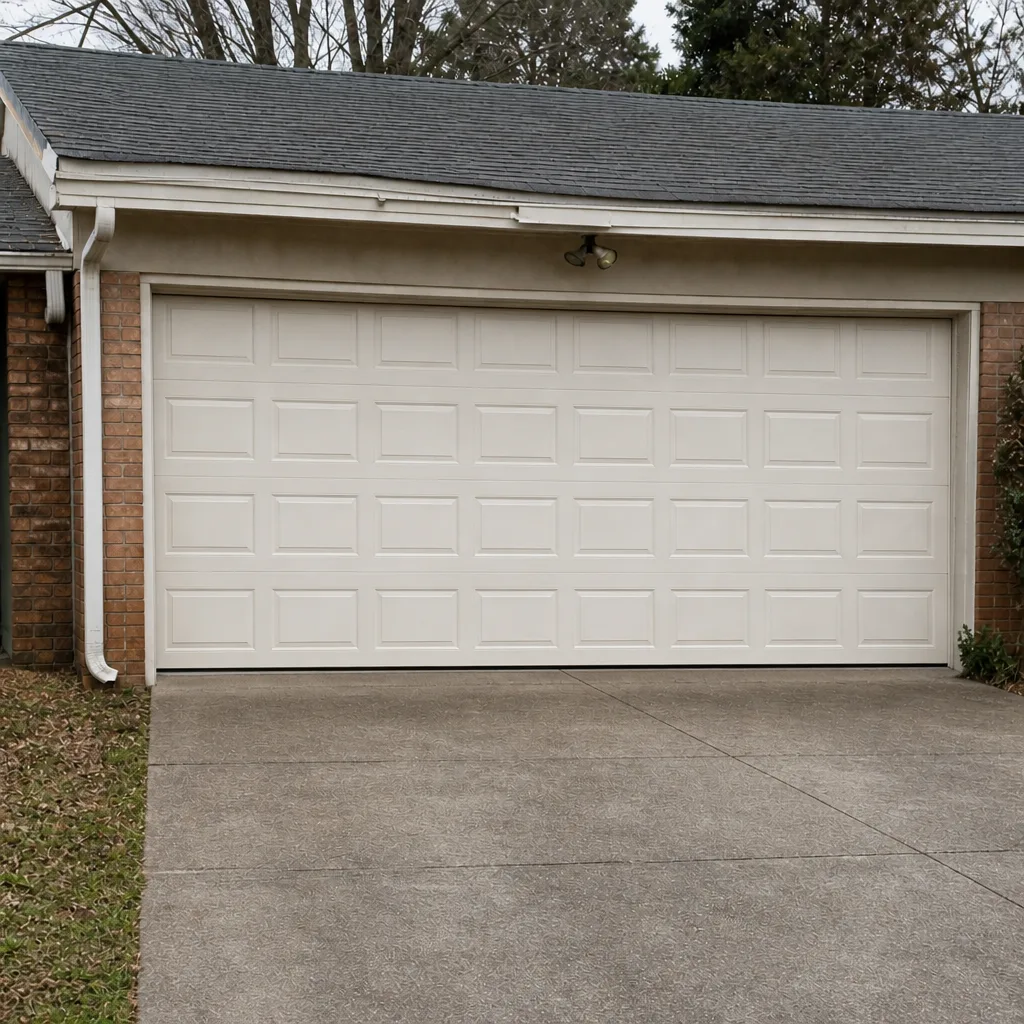 After
When to Call a Professional
Call today if you have any Tier 1 sign – a door that reverses without hitting something, a visibly bent track, a broken spring, a frayed cable, a door that hangs crooked, or one that won’t stay closed. Those are not problems to wait on. Also call us if you have a Tier 2 sign that has lasted more than two weeks or is getting worse, or if you have a Tier 3 sign you’re not sure about and just want a set of eyes on it. Garage Door Repair Stonecrest offers free estimates in Stonecrest – call (855) 604-8729. We’ll tell you what tier we think the issue is, what tests we’ll run, and how we’ll price it. For a door stuck open or closed, our emergency line is available; when your door won’t move, we will.
Frequently Asked Questions
The most urgent signs are a door that reverses unexpectedly, a visibly bent track, a snapped spring, frayed cables, a door that hangs crooked, and a safety sensor that doesn’t reverse the door when you pass something under it. Each of these means the door is no longer safe to operate, and each should be treated as a fix-today sign.
Age and failure produce different noise patterns: a steady rumble or squeal that appears gradually is usually wear, while a sharp snap, a new grinding that appears at one exact travel point, or a stutter that shows up suddenly is usually a component failing. The tone and timing of the noise tell you which tier it belongs to, and where in the door cycle it happens tells you which part to suspect.
A cosmetic problem is one that only affects how the door looks – a scratch, a faded panel, surface rust. A safety-critical problem is any sign that affects how the door closes, reverses, stays balanced, or moves along its track. Anything that changes the door’s path or its balance is safety-critical, even if it looks minor.
For a single torsion spring replacement in Stonecrest, most repairs fall in a category we price by written estimate, and a matched pair is usually replaced together because the two springs wear at the same rate – a pair costs about twice the range quoted for a single spring. We’ll confirm the exact number in a written estimate before any work starts, and the price we agree on is the price. Call (855) 604-8729 for a free estimate.
Yes. Stonecrest’s hot summers, sharp overnight temperature swings, and humid stretches stress the springs through cycling, dry out and crack the weather seal, and gum up tracks and rollers with pollen and dust. That’s why we see spring fatigue and bottom-seal failure show up earlier here than in more stable climates, and why hot-season and wet-season checks are worth doing on schedule.
A straining opener is a fix-this-week sign, not a put-it-off sign. It usually means the door is heavier than it should be – often a weakening spring or a binding roller – and the opener is forcing it. Keep using the door only if it still opens, closes, and reverses correctly, and schedule a service call before the strain damages both the opener and the door.
Yes. Same-day service and emergency garage door repair are a core part of what we do, and for a door stuck open or closed we prioritize the call. Call (855) 604-8729 and describe what the door is doing and which brands you have, and we’ll confirm availability for today when you call.
The local professionals we connect you with are licensed and insured as their state requires. Our technicians have up to 12 years of experience, and we work on the LiftMaster, Chamberlain, Genie, Clopay, Amarr, Wayne Dalton, Craftsman, and Raynor equipment that’s already on your door. Call (855) 604-8729 for a free estimate.
The Bottom Line
Not every garage door warning sign deserves the same reaction. A reversing door, a bent track, a broken spring, or a hanging panel is a fix-today safety matter. A grinding track, a straining opener, or a worn weather seal is a fix-this-week item that gets worse if you wait. A squeaking hinge or faded paint is a monitor item you can handle on your own schedule. Stonecrest’s humid, temperature-cycling climate makes spring fatigue and weather seal failures more common than you might expect for your door’s age, so a twice-a-year ground-level inspection goes a long way. If anything’s in doubt, call (855) 604-8729 – the estimate is free, and the written price is the price. We work on your brand, whatever it is.
Written by the team at Garage Door Repair Stonecrest.