Last updated November 23, 2026
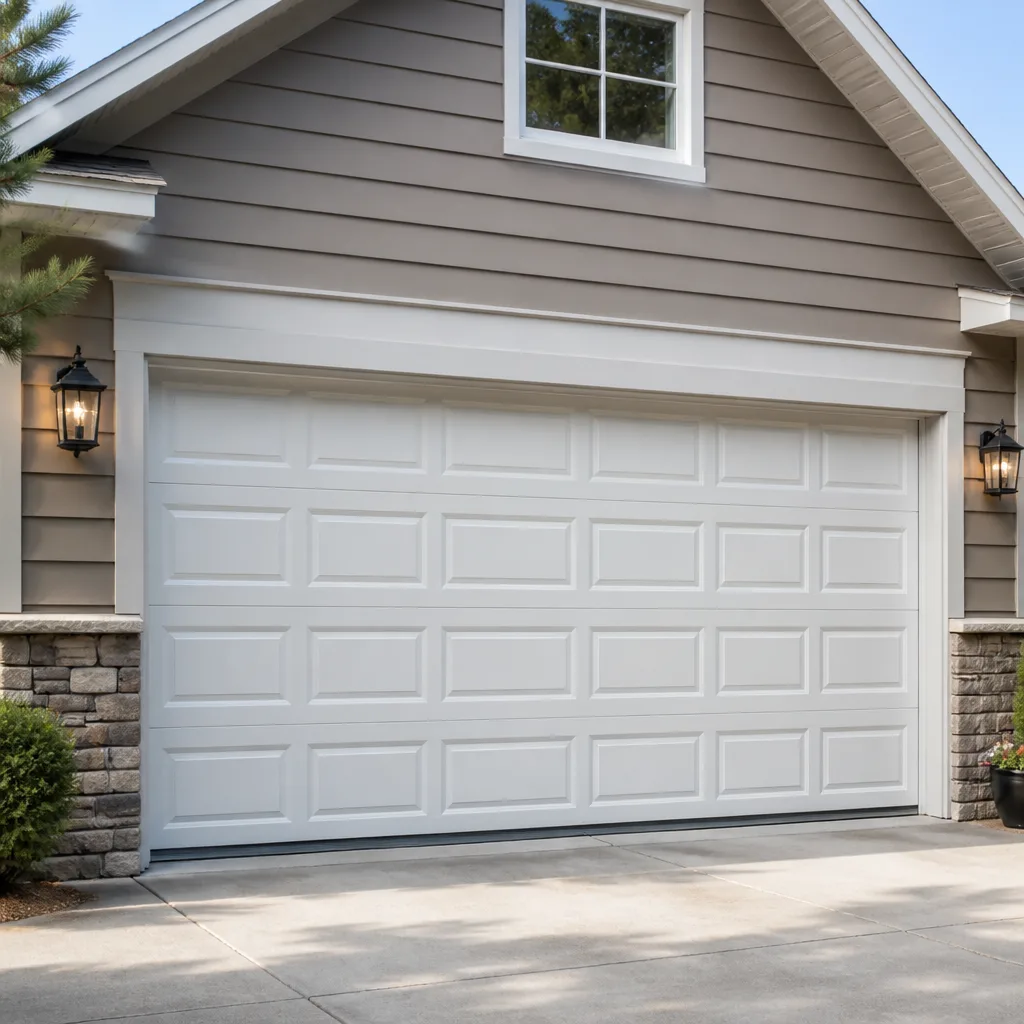 Raised-panel steel
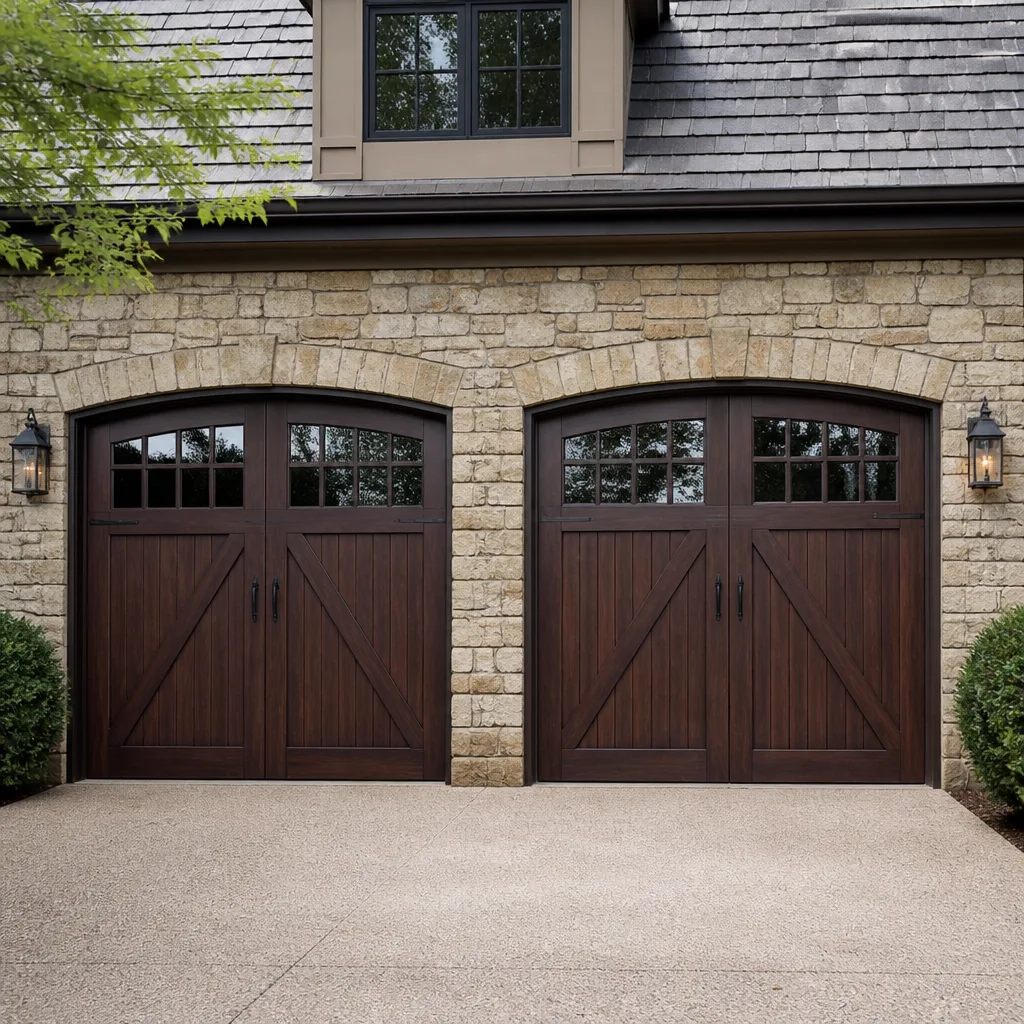 Carriage house
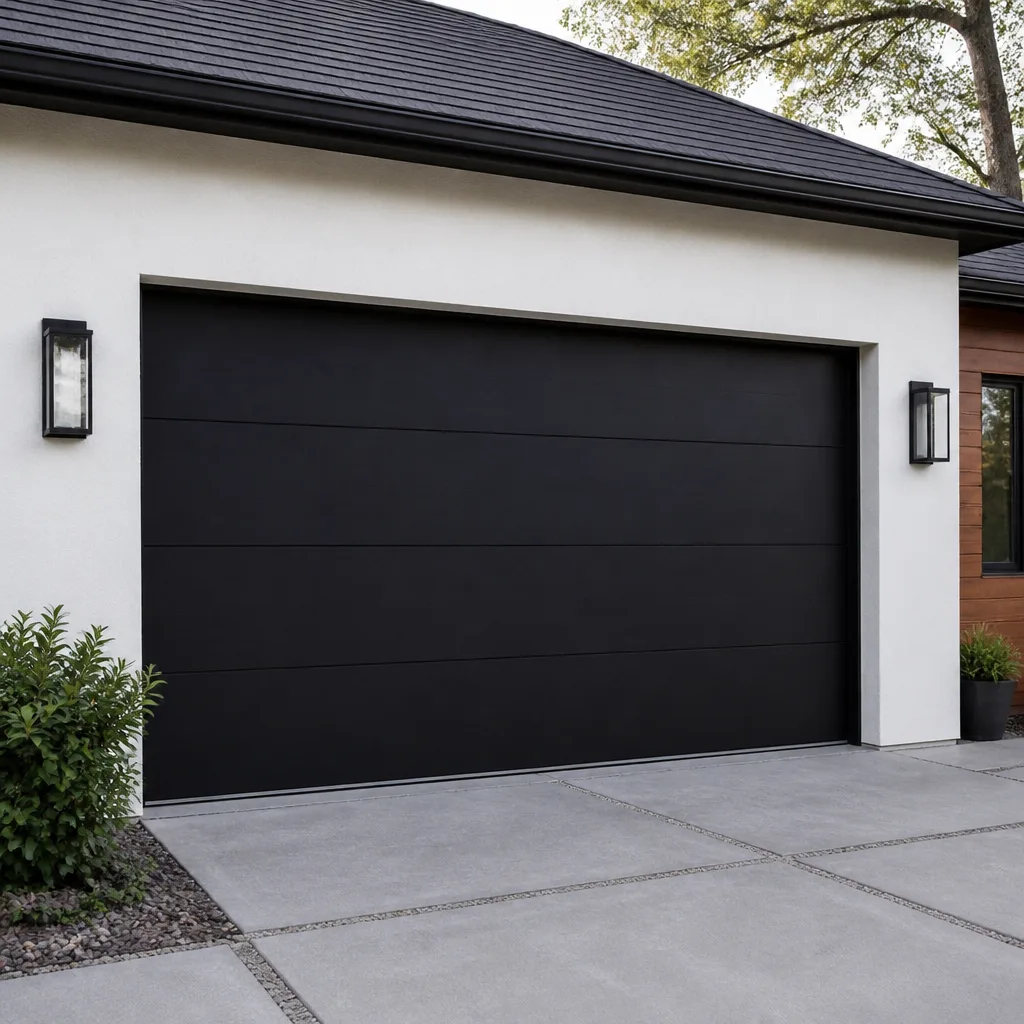 Modern flush
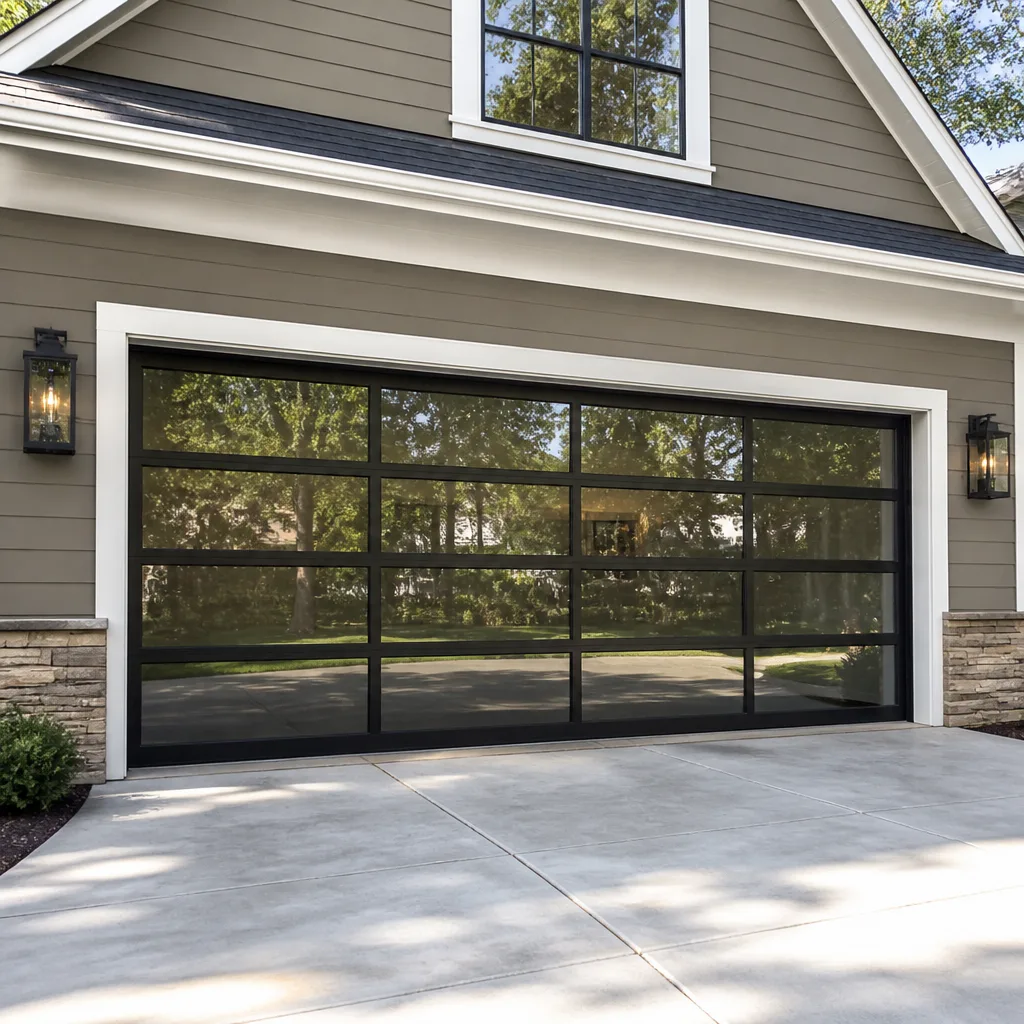 Full-view glass
 LiftMaster openers
 Chamberlain openers
Full 25-point door and opener safety check with every visit - springs, cables, rollers, tracks, and your LiftMaster or Chamberlain opener included
You get a price before we start. It does not change when the pro arrives.
Get your free estimateThe Complete Guide to Garage Doors in Stonecrest
Most garage door guides are written for a hypothetical homeowner in a hypothetical city. Stonecrest isn’t hypothetical. It sits at a specific elevation, under a specific humidity profile, and inside a housing mix that runs from newer planned subdivisions to older DeKalb County builds with quirks nobody documents. Those conditions make certain door materials fail faster than the national averages suggest they should. This guide maps every decision you’ll face, from steel versus composite to opener types to HOA color rules, to conditions that actually exist in this part of Stonecrest. By the end you’ll know what to buy, what to avoid, and what to ask before you sign an estimate.
Quick Answer
The garage door that lasts longest on a Stonecrest home is an insulated steel door with a factory finish, a belt-drive opener matched to your ceiling height, and hardware serviced once a year before the summer humidity peaks. Humidity and heat cycles matter more here than door style, and HOA rules usually narrow your color choices more than your material choices. If you’re replacing a door on a pre-2008 Stonecrest home, measure the rough opening first, because older builds often aren’t standard.
Styles & brands we work with
- Raised-panel steel
- Carriage house
- Modern flush
- Full-view glass
- LiftMaster openers
- Chamberlain openers
Table of Contents
- Why Stonecrest Humidity Changes What Door You Should Buy
- HOA Rules in Stonecrest and How They Limit Your Door Choices
- Why Older Stonecrest Homes Have Non-Standard Rough Openings
- Chain, Belt, Screw, or Direct-Drive: Matching an Opener to Your Garage
- How to Read a Door’s R-Value Honestly
- Springs and Cables: The Repair You Should Never DIY
- What Garage Door Work Costs in Stonecrest
- How to Choose a Garage Door Company in Stonecrest
Why Stonecrest Humidity Changes What Door You Should Buy
Stonecrest runs hot and humid for a long stretch of the year, then swings into cold snaps that arrive fast. A garage door on a Stonecrest home expands in July and contracts in January, and it does that cycle over and over, every year. What fails first depends entirely on the material.
Steel is the most common door in Stonecrest because it handles this cycle best. The steel itself barely moves. What fails is the finish and the bottom of the panel, where water sits after rain and humidity lingers. A steel door with a factory-applied finish and a proper bottom seal holds up well for years. A steel door with bare edges or a rusted bottom section fails much sooner.
Composite and engineered wood doors look warmer and match brick homes nicely, but they need more attention in Stonecrest’s climate. Composite panels can absorb moisture at seams and swell. Engineered wood needs resealing on a schedule the manufacturer sets, and skipping it in this humidity accelerates the damage.
Solid wood doors are the hardest to keep in Stonecrest. Wood moves with humidity, and constant movement opens joints where water gets in. If you love the look, plan on regular maintenance and understand that a wood door here is a commitment, not a one-time purchase.
- Steel: best all-around choice for Stonecrest; watch the finish and the bottom seal.
- Composite: decent looks, but check seams carefully and keep them sealed.
- Engineered wood: good appearance, requires scheduled resealing.
- Solid wood: highest maintenance in this climate; best for owners who want the look and will keep up with it.
Whichever material you pick, the bottom seal is the first thing to inspect every spring. It’s where Stonecrest’s humidity does its quietest damage.
HOA Rules in Stonecrest and How They Limit Your Door Choices
Many Stonecrest neighborhoods are governed by HOAs, and those associations usually have architectural review rules about garage doors. The rules tend to focus on color, panel style, and window options rather than material. You might be free to choose steel or composite, but locked into a specific palette of earth tones.
Before you order anything, pull your HOA’s architectural guidelines and read the garage door section closely. If the rules are ambiguous, submit your chosen color and style for approval in writing. Getting a signed approval before the door is ordered saves you from a door that’s technically fine but fails review.
Common Stonecrest-area HOA patterns we run into:
- Carriage-house style doors required in some subdivisions for street consistency.
- Restrictions on window placement and the number of window panels.
- Color palettes tied to the home’s exterior, usually limited to neutrals and earth tones.
- Prohibitions on certain finishes that reflect light differently across the street.
- Requirements that replacement doors match the original style if the home is in an older phase of the subdivision.
If your HOA requires a specific style, that narrows your brand options. Clopay and Amarr both make carriage-house designs that satisfy most Stonecrest HOA guidelines, which is one reason those brands come up often in this market. Get the approval first, then let the door style follow.
Why Older Stonecrest Homes Have Non-Standard Rough Openings
Stonecrest was incorporated in 2008, but plenty of homes here predate that by decades. Homes built before incorporation, and especially older DeKalb County builds, frequently have garage door rough openings that don’t match today’s standard sizes. That matters the moment you try to replace a door.
A rough opening is the framed hole in the wall where the door goes. Standard single-car openings are typically 8 or 9 feet wide by 7 feet tall, and double-car openings are usually 16 feet wide. Older Stonecrest homes sometimes have openings that are an inch or two off in either direction. A door sized to “standard” won’t fit cleanly, and forcing it creates gaps, alignment problems, and a door that never seals properly.
- Measure the rough opening width at the top, middle, and bottom. Use the smallest measurement.
- Measure the height on both sides of the opening. Use the smallest measurement.
- Measure the headroom above the opening, from the top of the door to the ceiling.
- Measure the side room on each side, from the door edge to the nearest wall.
- Note any obstructions: water heaters, HVAC units, or structural beams.
Those five measurements tell you which doors will fit and which openers will work. A professional measure takes about 20 minutes and catches problems before a door is ordered. On a pre-2008 Stonecrest home we treat the measure as the most important step in the whole job.
Chain, Belt, Screw, or Direct-Drive: Matching an Opener to Your Garage
Opener type matters more in Stonecrest than in many places because garages here are often attached to the house, and the noise travels straight into a bedroom. A chain-drive opener is durable and inexpensive but loud. A belt-drive is quiet. Screw-drive sits in the middle. Direct-drive is quiet and low-maintenance but has fewer service options if it fails.
Which one fits your Stonecrest garage depends on three things: ceiling height, whether the garage shares a wall with a bedroom, and whether the door is a single or double.
- Chain-drive: reliable and less expensive, noisier. Fine for a detached or standalone garage.
- Belt-drive: the quiet choice for attached garages and homes where a bedroom sits near the garage wall.
- Screw-drive: steady and quiet-ish, good for garages that get heavy daily use.
- Direct-drive: smooth and quiet, fewer moving parts, but repair options are narrower.
On the smart-home side, LiftMaster and Chamberlain both integrate with modern connected home systems, so if you want to open the door from your phone or check whether you left it open, those are the brands to look at. Genie and Craftsman remain widespread and dependable in older Stonecrest homes, and replacement parts are still easy to source. A competent garage door opener repair call can revive a legacy unit rather than replacing it, so don’t assume an old opener is a dead one.
We’re certified to work on all four of these opener brands, which means the diagnosis is brand-specific instead of guesswork. That’s the difference between “swap the opener” and “replace the gear and the travel module, keep the unit.”
How to Read a Door’s R-Value Honestly
R-value measures insulation resistance. Every garage door seller lists a number, and every number is more complicated than the marketing suggests. The rating you see on a door is usually for the center of the panel, not the whole door. The bottom seal, the sides, and the hinges leak far more air than the panel leaks heat. So a door with a high center-of-panel R-value can still let a lot of heat into the garage if the sealing is sloppy.
That matters in Stonecrest because most garages here are attached to the house. The garage shares a wall with a bedroom, kitchen, or hallway, and that shared wall carries a lot of heat back and forth. A garage door with no insulation lets the garage cook in summer, and that heat pushes into the house. Insulation slows that transfer and keeps the shared wall closer to room temperature.
Here’s the honest way to read R-value:
- Ignore the center-of-panel number as a standalone figure. Ask about whole-door performance.
- Calculate the insulation as a proportion of the wall you’re covering. A large garage door covers a large wall, and that wall matters.
- Look for doors with solid, filled panels rather than hollow ones. Filled panels keep more of the insulation value.
- Insist on a tight perimeter seal. Sealing does more for your garage than an extra R point.
In Stonecrest’s climate, an insulated door is worth it for attached garages. A non-insulated door is acceptable for detached or standalone garages that nobody uses as a workspace.
Springs and Cables: The Repair You Should Never DIY
Garage door springs and cables are under extreme tension, and they fail without warning. A torsion spring holding a door can release enough force to cause serious injury, which is why spring work is not a homeowner DIY job under any circumstances. Trained technicians use winding bars, tension gauges, and the right size spring for the door so the system stays balanced. We treat garage door spring repair as a specialty because it is one.
What you can do safely: listen. A door that groans, pops, or lurches during travel is a door with spring or cable trouble. A door that opens halfway and stops has likely lost tension. A door that slams shut instead of lowering is a danger to anyone underneath.
What you should not do: touch, cut, or loosen a spring or cable yourself. Don’t try to wind it. Don’t cut a stuck cable with a bolt cutter. Don’t reach into the track to free a jammed door while tension is still on the system.
- Stop using the door.
- Keep anyone, especially children, away from the door.
- Call a trained technician.
Most garages here have a torsion system with one or two springs. Replace a matched pair together even if only one failed, because the second has run the same number of cycles. Springs are rated in cycles, not years. A door that’s used four times a day will use up a spring far faster than a door used once a day, and that is the number that actually predicts failure.
What Garage Door Work Costs in Stonecrest
Prices for garage door work in Stonecrest vary with door size, brand, and whether the job includes hauling away the old door. The ranges below are typical estimates, not fixed prices. Every job ends in a written quote that sets the final number, and that quote is agreed before any work starts.
- Single spring replacement: roughly $180 to $340 per spring. Matched pairs (both springs on a two-spring door) usually run about twice that.
- Opener repair: typically $120 to $300 depending on the failed part and opener brand.
- Opener replacement (unit only, installed): typically $350 to $700, higher for belt-drive or smart-enabled units.
- New single-car door, installed: typically $900 to $1,800 depending on style, material, and insulation.
- New double-car door, installed: typically $1,400 to $3,200 depending on the same factors.
- Emergency same-day call: a diagnostic trip plus the repair cost; ask for the written quote before work begins.
Prices vary by brand and style. A basic steel door costs less than a carriage-house composite door. An insulated door costs more than a non-insulated one. Smart-enabled belt-drive openers cost more than a basic chain-drive. The written quote itemizes each piece, so you can see exactly what’s driving the price.
We don’t publish prices as fixed because door sizes, opener models, and door conditions differ too much from one Stonecrest home to the next. What we do commit to is the number on the written quote. The price you agree to is the price on the invoice. If we find something unexpected once the door is opened up, we stop and tell you before any additional work begins. Call (855) 604-8729 for a free estimate.
How to Choose a Garage Door Company in Stonecrest
A garage door company is a trained, insured team that diagnoses and repairs your specific system, not a generic handyman with a truck. The best sign of a quality company in Stonecrest is whether they ask about your specific equipment before quoting. The wrong sign is a flat-rate price given over the phone without seeing the door.
Here are questions worth asking before you hire:
- Which brands are your technicians certified to work on? A company trained across eight major brands will diagnose your Clopay, Amarr, Wayne Dalton, Genie, or LiftMaster system correctly.
- Do you provide a written quote before work starts? Any company that won’t is a red flag.
- Can you handle installation as well as repair? A company that refers installation out doesn’t have the full picture of your door.
- Do you offer emergency service? When a door fails and your car is trapped inside, an emergency service number is worth having.
- Are you insured? The local pro should be licensed and insured as their state requires.
We work on eight major brands, so we don’t have a reason to steer you toward one door over another. We can tell you what’s failing, what a repair will cost, and whether a replacement makes more sense. If a repair keeps a door working for years, we say so. If the door is at the end of its life, we say that too. We’ve put that kind of honest diagnosis behind garage door repair in Stonecrest because it’s the only way to keep the call at the end of the job.
Common Mistakes to Avoid
- Buying a door before checking HOA rules. Stonecrest HOAs have architectural guidelines that restrict color and style. Order the door first and you may be stuck with a return, a review, and a delay.
- Assuming a “standard” door fits an older home. Homes built before Stonecrest incorporated in 2008 often have non-standard rough openings. Measure before you buy.
- Choosing an opener on price alone. A cheap chain-drive opener in an attached garage creates noise complaints from bedrooms on the other side of the wall. Match the opener to the garage, not to the cheapest listing.
- Taking a marketing R-value at face value. The center-of-panel number is not the whole-door performance. Ask about sealing, panel fill, and how the door performs as a unit.
- Touching a spring or cable yourself. Springs and cables are under extreme tension and cause serious injury every year. No amount of saved repair money justifies the risk.
- Replacing one spring and leaving its pair in place. The second spring has the same cycle count as the first. Replace both and you only pay for one visit.
- Skipping the bottom seal inspection. In Stonecrest’s humidity, the bottom seal is where water gets in and where rust starts. Check it every spring.
See the difference
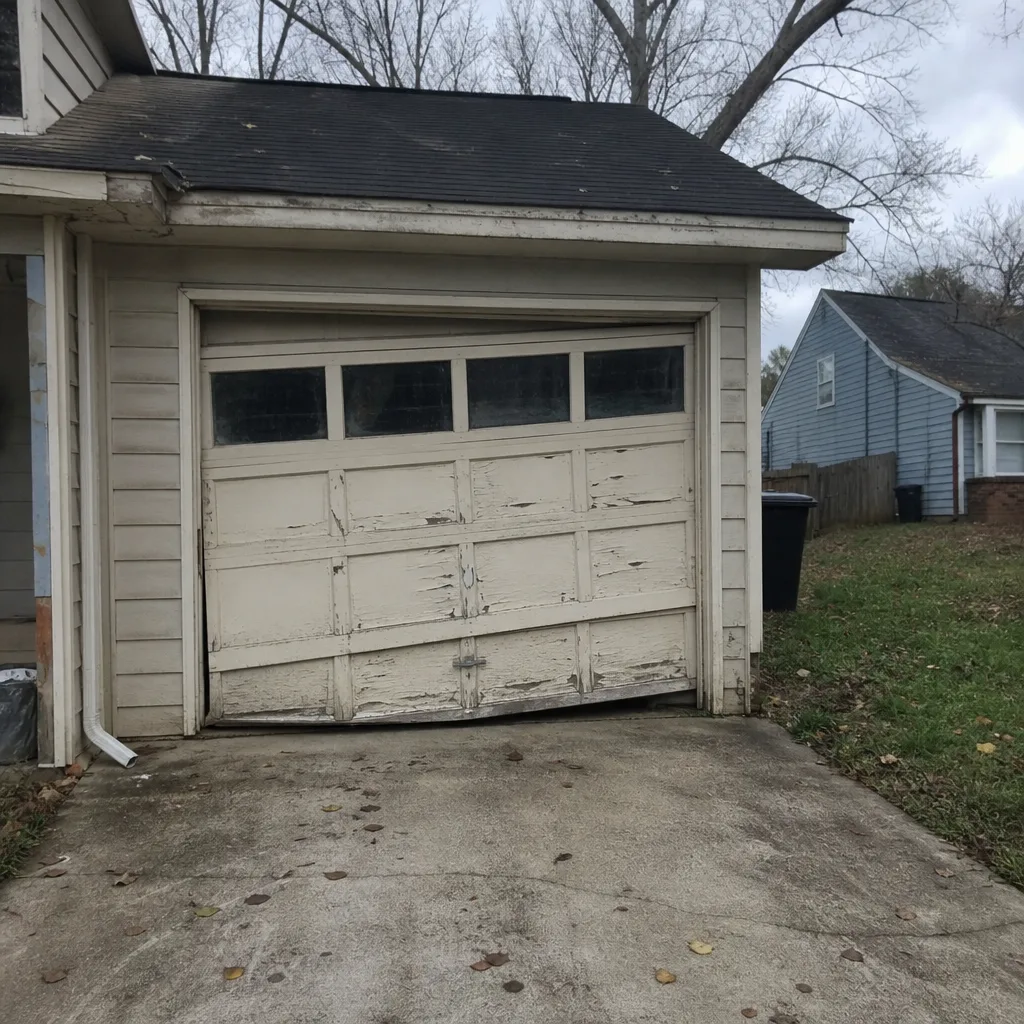 Before
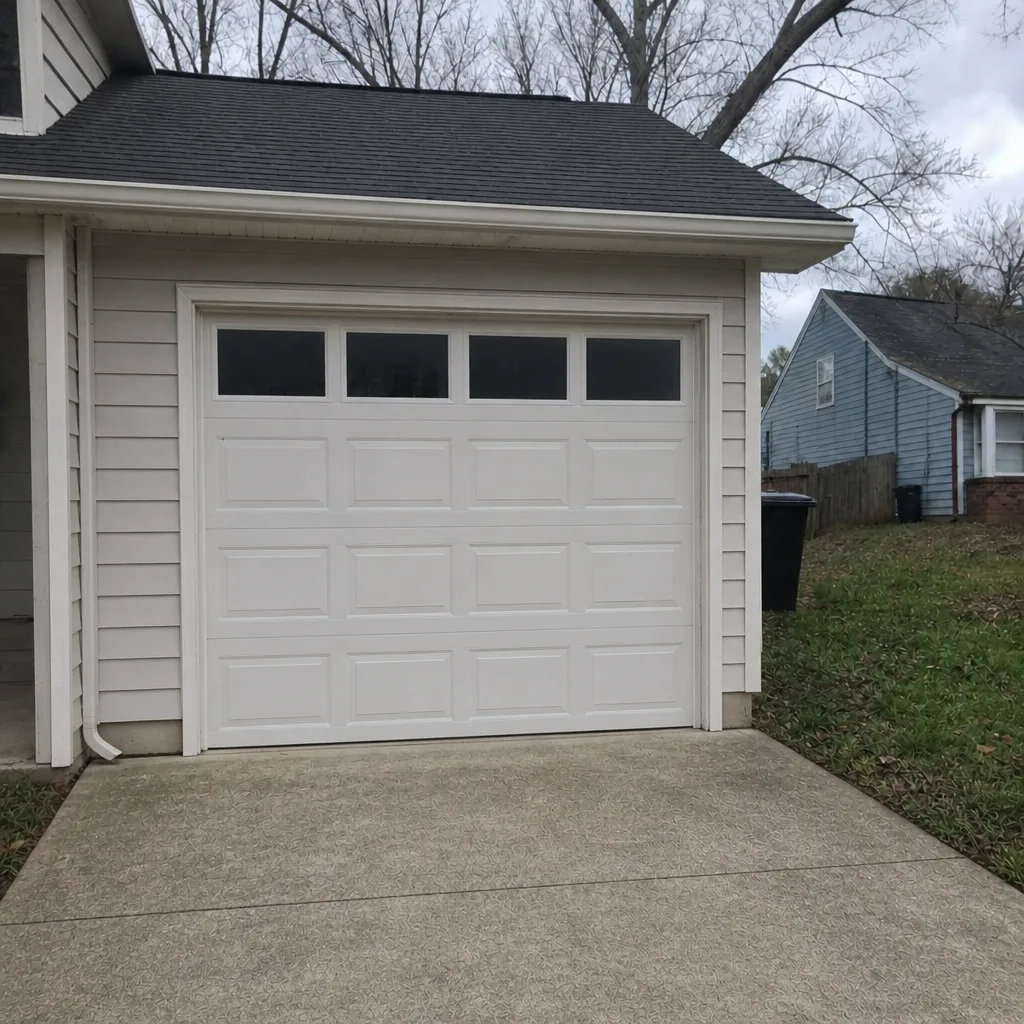 After
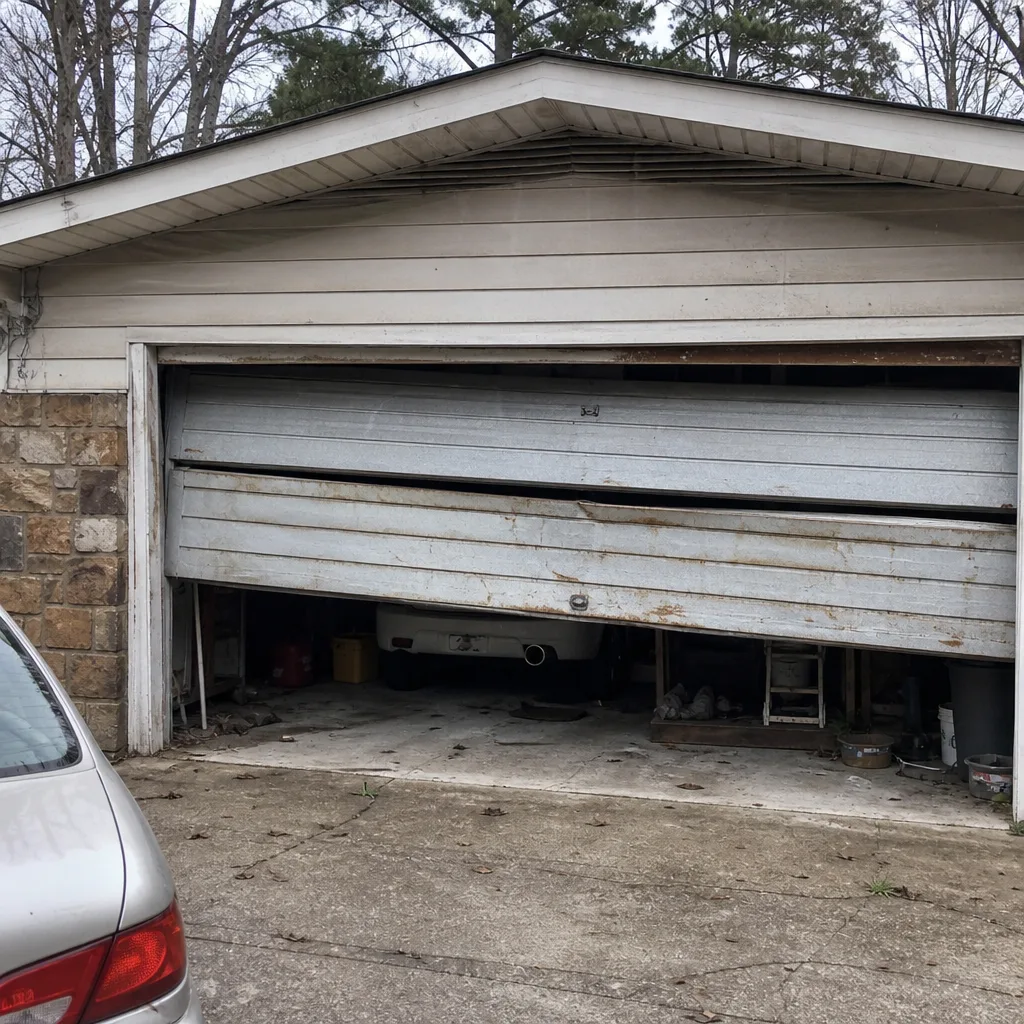 Before
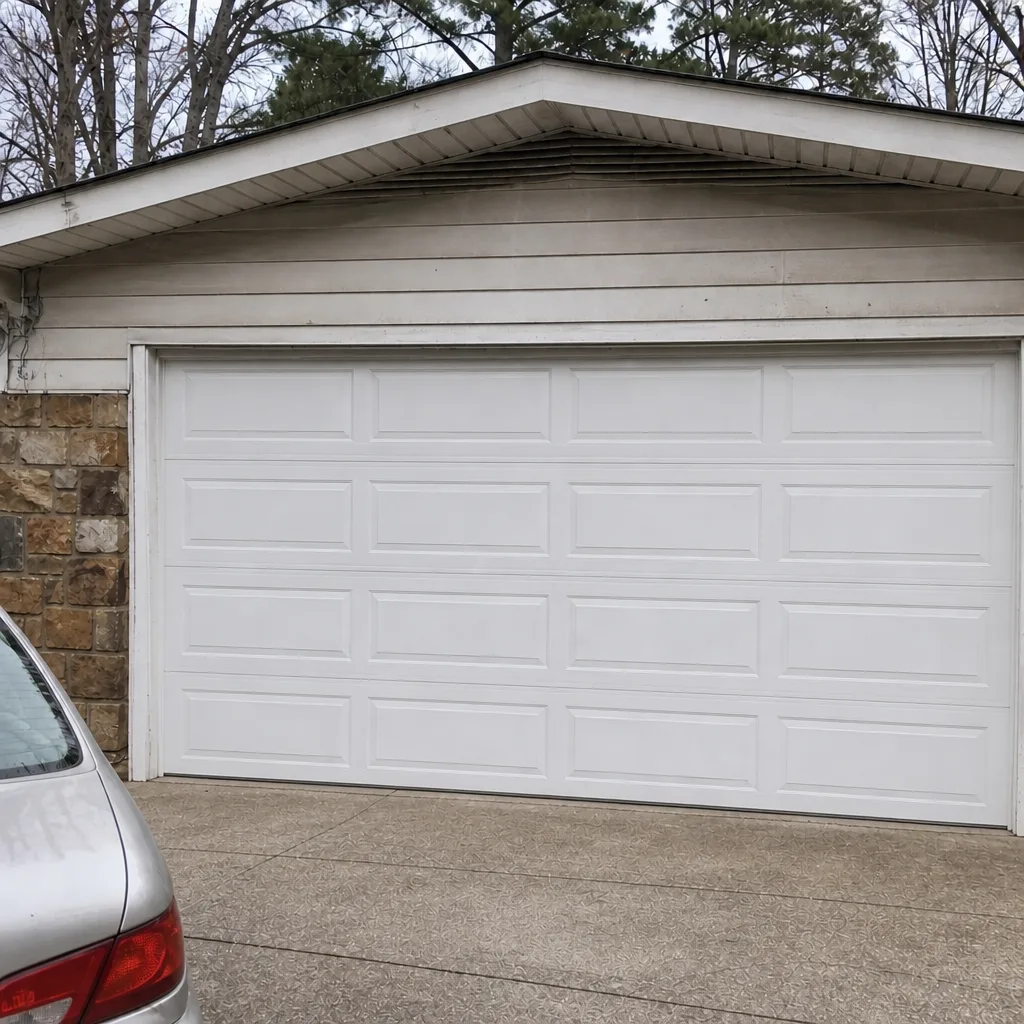 After
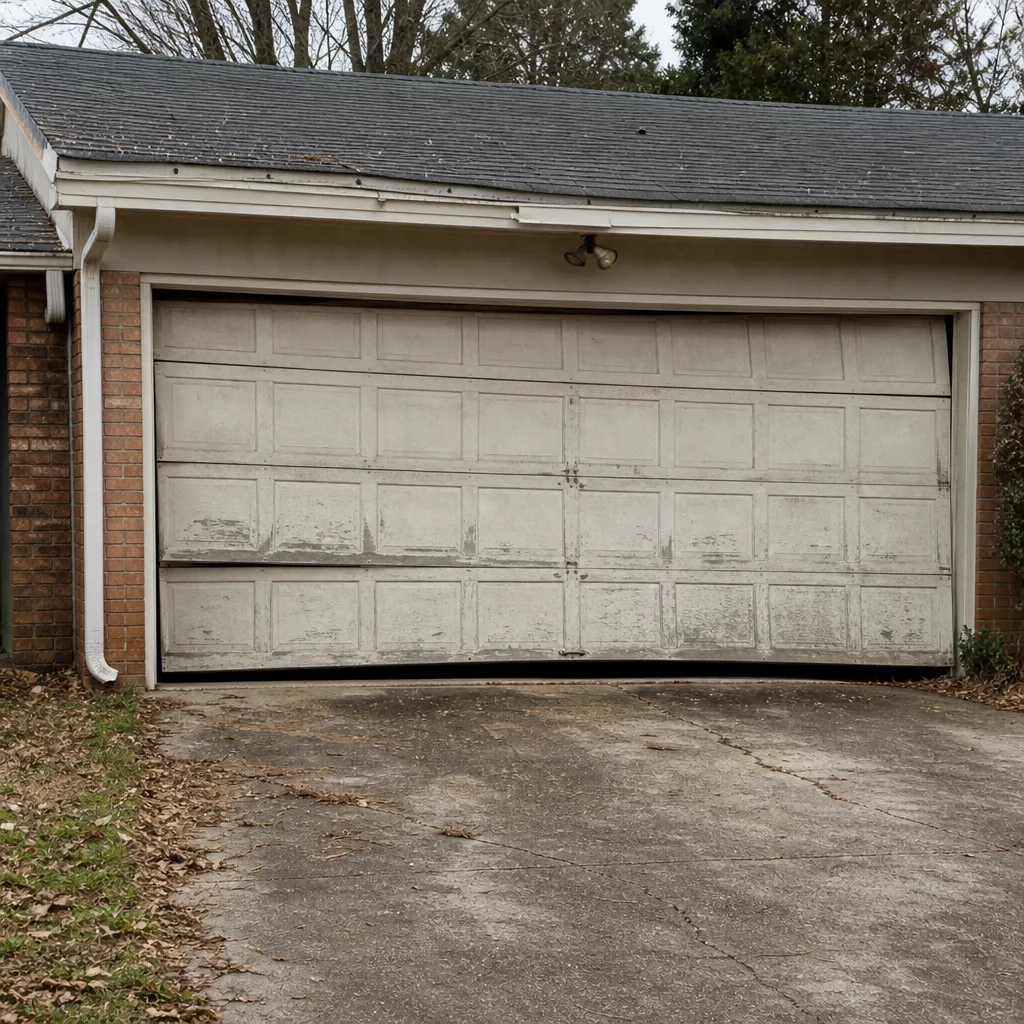 Before
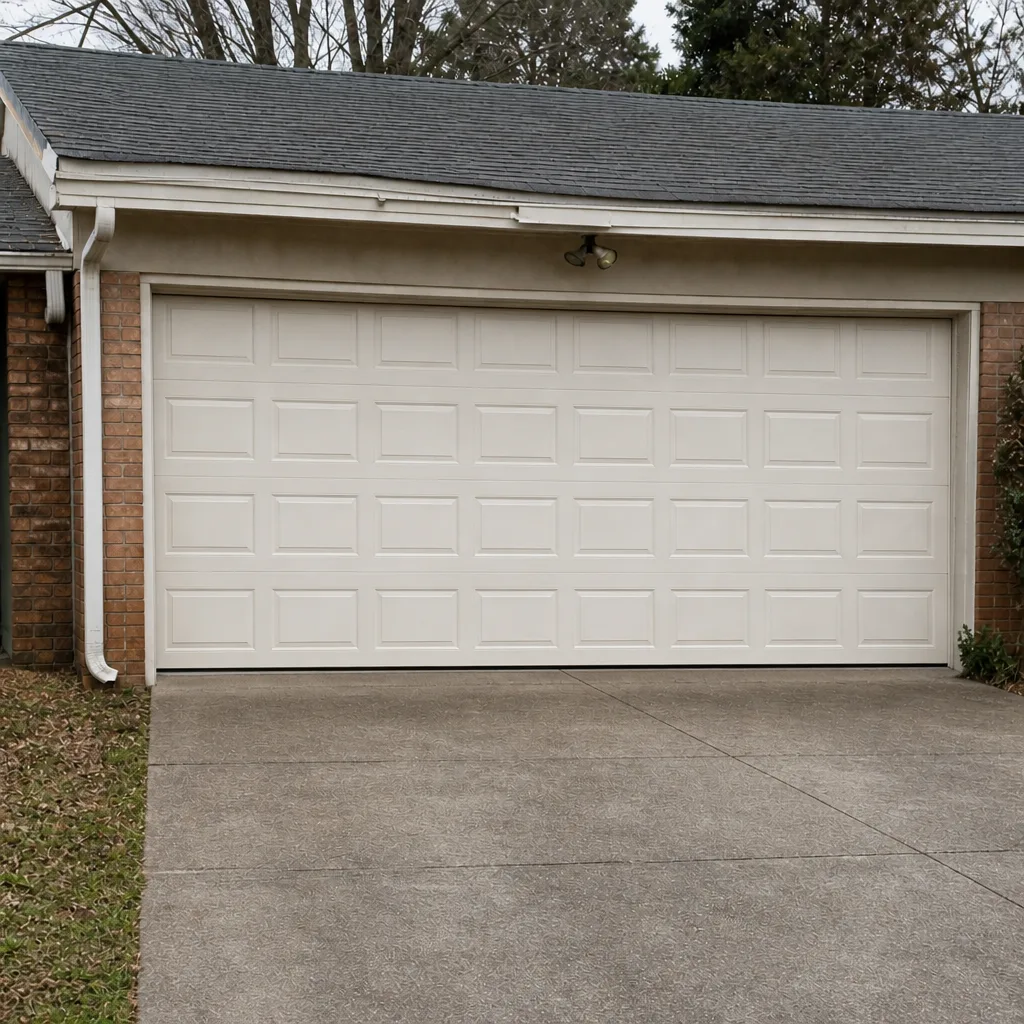 After
When to Call a Professional
Call a professional when the door won’t move at all, when it moves unevenly, when you hear a pop or bang from the spring system, or when the door reverses before it closes. Call when you’re planning a replacement and want a proper measure before ordering. Call when an opener is failing, when the remote only works sometimes, or when the wall button doesn’t respond. Call when you’re not sure whether the problem is the door, the opener, or the safety sensor. For an emergency, a same-day service call is the right move, because a non-working door on a Stonecrest home is an access problem and a security problem at the same time. Garage Door Repair Stonecrest offers free estimates in Stonecrest. Call (855) 604-8729.
Frequently Asked Questions
Most garage door repairs in Stonecrest fall in the $120 to $340 range, depending on whether it’s an opener issue or a spring. Spring replacement in particular runs about $180 to $340 per spring, and matched pairs cost roughly twice that. Call (855) 604-8729 for an exact quote. Estimates are free.
Yes, same-day service is available for Stonecrest calls, and emergency service is a core offering rather than an afterthought. Dispatch runs from 7am to 7pm. Call (855) 604-8729 and we’ll tell you what’s available.
No. The written quote sets the price, and it’s agreed before any work starts. If we find something unexpected once the door is opened up, we stop and tell you before doing any additional work. Call (855) 604-8729 for a free estimate.
Yes. The local pro we connect you with is licensed and insured as Georgia requires. We can work with your insurer if a claim is involved. Call (855) 604-8729 with any questions about licensing or insurance.
Insulated steel holds up best in Stonecrest’s climate, because the steel itself barely expands and contracts. What matters more than the material is the finish and the bottom seal; a steel door with a factory finish and a sealed bottom will outlast a composite or wood door that needs resealing. A professional measure and quote will tell you which styles fit your opening.
Most cities require a permit for structural changes, but a like-for-like garage door replacement often doesn’t need one. Ask the City of Stonecrest’s building department to confirm what your specific job requires before ordering, and keep the answer with your paperwork.
The Bottom Line
Stonecrest’s climate, HOA rules, and housing mix shape garage door decisions in ways a generic guide can’t cover. Choose insulated steel for the humidity, check HOA guidelines before you shop, measure the rough opening on pre-2008 homes, and match your opener to the garage it lives in rather than the cheapest listing. Read R-value as a whole-door number, not a marketing figure. Never touch a spring or cable yourself. When a repair is beyond a simple adjustment, a trained technician on your specific brand is the right call. For a free estimate, Garage Door Repair Stonecrest is ready at (855) 604-8729.
Written by the team at Garage Door Repair Stonecrest.